Karran Gupta.

What does a lifecycle program that pays look like?

A lifecycle program pays when deliverability is protected first, the email platform is replaceable, and every send is tied to an event the business already counts. Volume comes last.

These articles cover the builds: the email engine that reached 5.9 million sends a month, an ESP migration under three live brands, and the deliverability work that came before any of it.

Get help designing the lifecycle program →

Start here

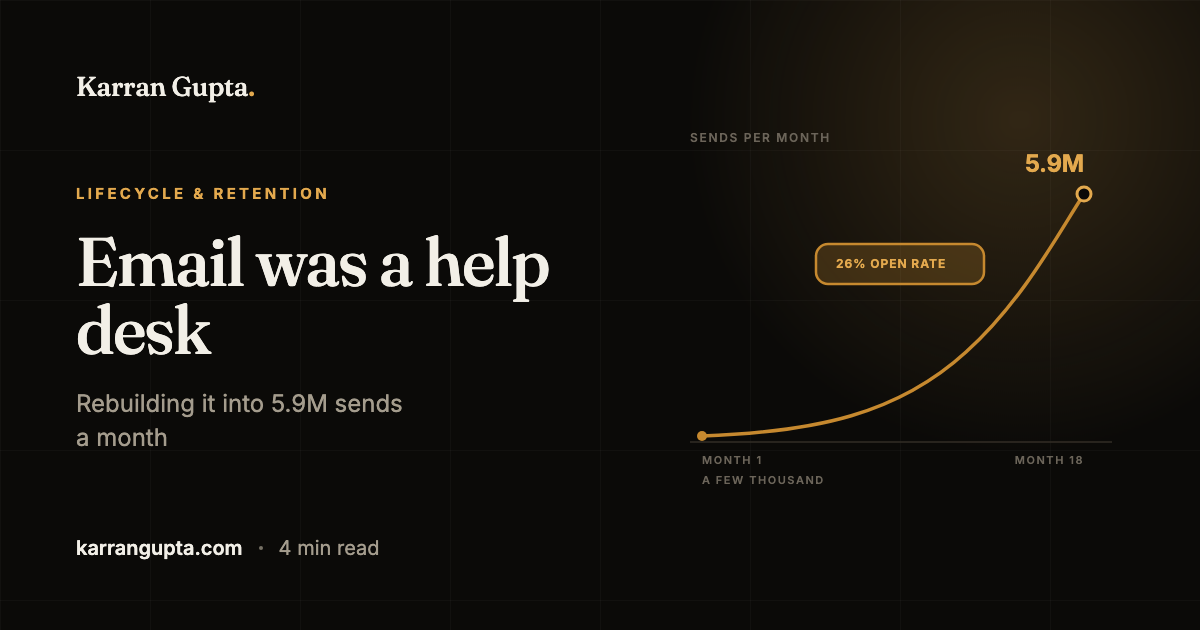
Email was a help desk: rebuilding it into 5.9 million sends a month

Lifecycle & retention · July 17, 2026 · 4 min read

Email was a help desk: rebuilding it into 5.9 million sends a month

FX Replay's email program sent receipts and password resets. Eighteen months later it sent 5.9 million a month at a 26% open rate. The rebuild order.

Read the article →
Migrating your email platform without touching the CRM

Lifecycle & retention · August 2, 2026 · 9 min read

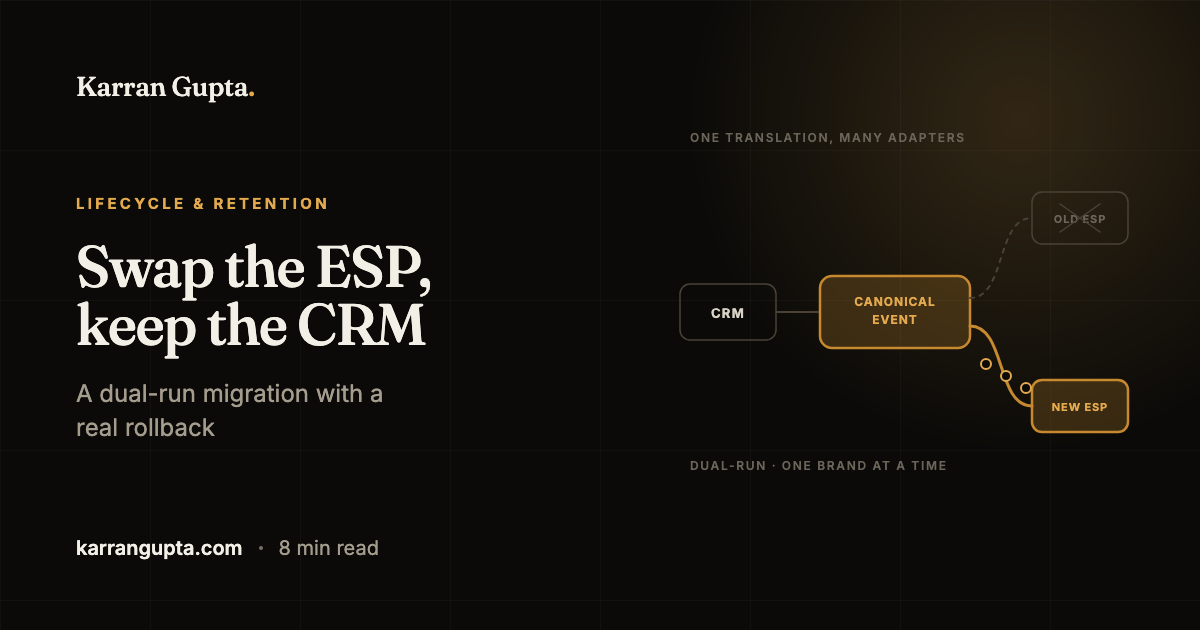
Migrating your email platform without touching the CRM

Swap your email platform while a live Salesforce business runs on top of it. The canonical envelope that made the ESP replaceable. Read the migration.

Read the article →
Deliverability before volume: building email across a multi-brand company

Lifecycle & retention · August 8, 2026 · 9 min read

Deliverability before volume: building email across a multi-brand company

Several brands on one sending reputation sit one mistake from spam. The subdomain, authentication, warming and hygiene setup that protects all of them.

Read the article →

Frequently asked questions

What is the difference between an ESP and a CRM?

An ESP sends and measures email at volume. A CRM is the record of who a person is and where they sit in the sales process. Keep the CRM as the source of truth and the ESP stays replaceable.

How do I protect deliverability across several brands?

Separate sending subdomains, full authentication (SPF, DKIM, DMARC), gradual warming, and list hygiene before volume. One brand's mistake should never cost another its inbox placement.

How big should an email program be?

As big as the events you can trigger it from. Sends that are not tied to a behavior the business counts are volume without a result.

Have a growth problem worth solving?

I write about what actually moved the numbers. If any of it maps to what you're facing, let's talk.

Book an intro call